Can you find the Poison ivy plant?
Poison ivy is a woody vine that thrives along much of the CERA trail. This is a common native plant in Maryland. Because contact with any part of the poison ivy plant can cause an itchy skin rash, it’s important to know what it looks like and to avoid touching it. Visit this page to see an example of poison ivy.
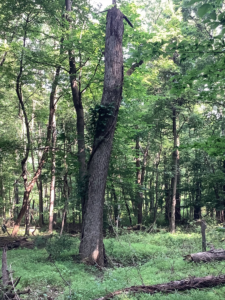
You can find poison ivy growing up trees as a hairy vine. These vines do not directly hurt trees when they are attached, unlike other vines like English Ivy vines that can compete with trees for nutrients.
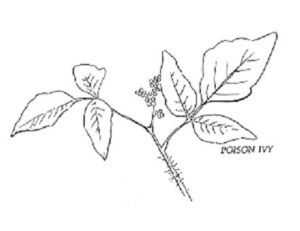
More than 60 species of birds eat poison ivy berries, including northern flickers, mockingbirds, and downy woodpeckers. Fall berries are especially important food sources for migrating birds traveling south down the east coast of the United States.
In the summer the ground here is also covered in Japanese stilt grass. This is a small, bright green grass that looks like small bamboo. It is a non-native invasive summer plant that outcompetes native understory plants because it can spread quickly and thickly in full sun or deep shade leaving no room for other small plants to grow.