This area is dominated by tulip poplars.
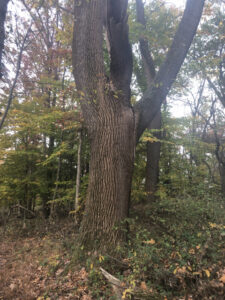
Tulip poplars are fairly fast-growing trees that rise tall, arrow-straight and branchless for many feet. They can grow quite large, like the specimen to your right on the other side of the trail. In May, tulip poplars have large, cup-shaped flowers that contain a drop of nectar to attract pollinating insects. Leaves turn a beautiful yellow in autumn.
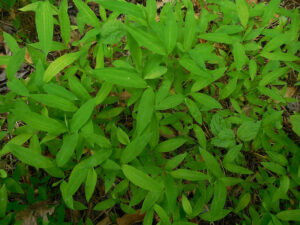
The forest floor is open and spacious here, but the plants that are present are mostly species not native to Maryland. They include Japanese stilt grass and mutliflora rose. Such “exotic” plants often out-compete uncommon native species and may negatively affect ecological processes of the forest.